Car repair in Singapore: the short answer
A good car repair starts with identifying the fault before replacing parts. If your car has a warning light, unusual noise, fluid leak, vibration, overheating, weak braking or a sudden change in how it drives, arrange an inspection promptly. Some faults can be monitored briefly; others, especially brake, steering, tyre, cooling and fuel-related faults, may make driving unsafe. A diagnostic-first approach helps you understand the likely cause, the repair options and the factors behind the final bill before work begins.
What drivers commonly notice before a repair is needed
The most useful information for a workshop is often what changed, when it happens and whether it is getting worse. Note whether the symptom appears at cold start, after the engine warms up, while braking, at a particular speed, over bumps, during rain or when the air-conditioning is on.
Signs that need an inspection soon
- A check-engine, battery, ABS, airbag or temperature warning light remains on.
- The car pulls, shakes, clunks, squeals or vibrates in a repeatable situation.
- You notice a fresh fluid patch, a burning smell or repeated loss of coolant.
- The engine hesitates, misfires, stalls, runs roughly or uses unusually high fuel.
- The air-conditioning becomes weak, intermittent or noisy.
When to stop and seek urgent help
- Red brake, oil-pressure or temperature warnings; steam; heavy smoke; or a strong fuel smell.
- A brake pedal that feels unusually soft, sinks, or produces much less braking than normal.
- Loose steering, a severely damaged tyre, a sudden loud mechanical noise or a serious collision impact.
- Rapidly rising engine temperature or coolant loss. Continuing to drive an overheating engine can turn a smaller cooling-system fault into a much larger repair.
Do not rely on a warning light disappearing as proof that the issue has gone away. Intermittent faults can leave useful stored information even when the light is no longer visible.
Common causes: one symptom can have several explanations
Modern cars are systems, not collections of isolated parts. A vibration while braking might relate to brake discs, pad deposits, wheel and tyre issues, suspension wear or another condition. An aircon system that is cold only while moving may involve airflow, condenser performance, refrigerant control or an electrical fault. Replacing the most obvious part without testing can be expensive and may not solve the complaint.
Brand, model, engine type, age and previous repairs matter. For example, turbocharged petrol engines, hybrids and electric vehicles each have different cooling and electrical arrangements. The sensible first step is not to assume a brand-specific fault; it is to inspect the vehicle, read relevant fault information and test the affected system.
What a transparent diagnosis process looks like
- Listen and confirm the concern. A technician should clarify the symptom, driving conditions, warning lights and recent work. A brief road test may be appropriate when it is safe.
- Carry out a visual and basic safety check. This can include fluids, leaks, tyre condition, battery connections, belts, hoses, brake condition and obvious damage.
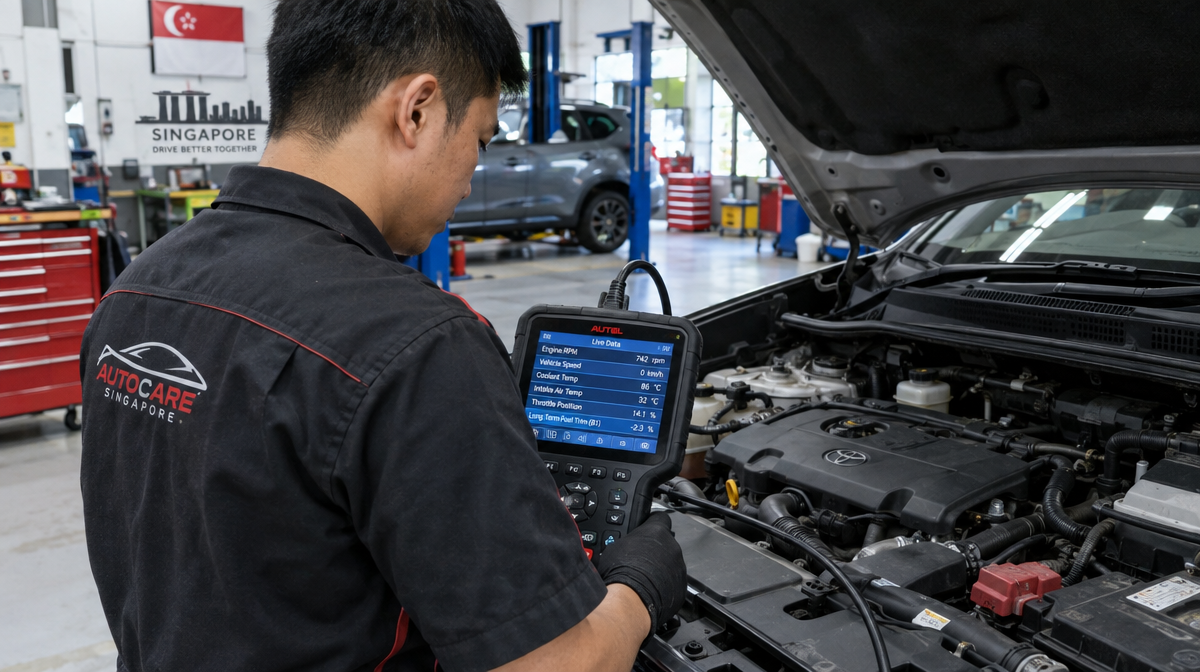
- Scan and test where relevant. Diagnostic equipment, live data, battery testing, pressure checks, charging-system tests, cooling-system checks or other targeted tests may be used. A fault code is a clue, not automatically a parts order.
- Isolate the cause. The workshop should connect the evidence to the symptom and distinguish a failed component from a wiring, connector, fluid, calibration or mechanical issue.
- Explain the findings before repair. Ask what has been confirmed, what remains possible, how urgent it is and what each option means for reliability and cost.
This process takes more thought than simply clearing a warning light or fitting a common replacement part. It is also the best protection against repeat visits for the same complaint.
Repair choices: cheapest, recommended and long-term
The cheapest option is not always the lowest-cost outcome. A small leak may be addressed by replacing a seal or hose when the surrounding parts are sound. If a related component is near the end of its service life or has caused the original failure, repairing only the visible symptom can lead to another visit soon after.
- Targeted repair: suitable when testing has isolated a serviceable, limited fault.
- Recommended repair: addresses the confirmed fault and related items necessary for safe, reliable operation.
- Long-term repair: may include sensible preventive items when access is already required or when worn companion parts are likely to affect the outcome.
- Replacement: necessary when a component is unsafe, irreparably damaged or no longer dependable after repair.
For parts, ask whether genuine and OEM options are available, what the practical difference is for your vehicle and what is included in the quoted work. “OEM” can mean different things in the market, so clarity matters more than a label alone.
What affects car repair costs in Singapore
A responsible estimate explains the factors rather than offering an unrealistic one-size-fits-all price. Cost can vary with the diagnostic time required, vehicle make and model, accessibility of the part, parts quality and availability, fluid or consumable needs, programming or calibration, and whether related damage is found once work begins. Accident damage can also hide issues behind a bumper, wheel, lamp or panel that are not visible in an initial walk-around.
Before approving a repair, ask for the scope of work, the parts being used, whether additional labour may be needed if a condition is discovered during dismantling, and whether the workshop will contact you before proceeding beyond the approved scope. Clear approval helps avoid surprises for both customer and workshop.
How long will the repair take
A simple inspection may be completed within a visit, while a complex intermittent electrical issue can require more time to reproduce and test. Routine repairs depend on workshop scheduling, access to the component and the availability of the correct parts. Parts ordering can be the main variable for uncommon, imported or model-specific items. Ask separately about diagnosis time, repair time and any wait for parts; they are not the same thing.
Can you still drive the car
| Situation | Practical response |
|---|---|
| Minor, stable issue with no safety warning | Book an inspection and monitor for changes. Do not delay indefinitely. |
| New noise, vibration, warning light or reduced performance | Drive only as necessary and cautiously to a workshop if the vehicle remains controllable and no urgent signs are present. |
| Brake, steering, tyre, oil-pressure, overheating, fuel-leak or severe electrical concern | Stop in a safe place and arrange assistance or towing rather than risk further damage or loss of control. |
When uncertain, choose the safer option. A short call with a workshop can help you describe the warning light or symptom and decide on the next step.
Edwin Garage’s diagnostic-first approach
At Edwin Garage, the aim is to identify the reason for the repair before recommending replacement. Customers should receive a clear explanation of the observed fault, the available repair paths and the urgency of the work. Where practical, ask to see the affected part or inspection finding. Discuss genuine and OEM alternatives where relevant, then approve the scope before additional work is carried out. This approach is designed to make car repair easier to understand—not to turn every visit into a technical lecture.
Be cautious of shortcuts: replacing parts based on a code alone, overlooking a simple wiring or fluid issue, or dismissing a repeat symptom without testing it. Careful diagnosis is often what separates a lasting repair from a temporary fix.
Beyond the workshop, keeping your car's interior in good shape matters too — for home upholstery care, professional fabric upholstery cleaning services like SofaCare SG are worth bookmarking.
Frequently asked questions about car repair
Can I drive with the check-engine light on
A steady light may allow cautious short-distance driving in some cases, but it should be scanned and diagnosed soon. A flashing light, severe rough running, smoke or major power loss needs urgent attention.
Why does my steering wheel shake
Possible causes include wheel balance, tyre damage, brake-related issues, worn suspension or steering parts. The speed and conditions of the shake help narrow it down.
Why does my car vibrate while braking
Brake components are one possibility, but wheels, tyres and suspension should also be considered. A proper inspection is safer than assuming the discs are always the cause.
Why is my engine overheating
Low coolant, leaks, a cooling fan issue, thermostat, water pump or internal engine problem can be involved. Stop safely if temperature rises abnormally or steam appears.
Why is my car battery draining overnight
A weak battery, charging-system problem, accessory left on or an electrical draw can contribute. Battery and charging tests help distinguish them.
Is wheel alignment necessary after changing tyres
Not automatically in every case, but checking alignment is sensible if tyre wear was uneven, the car pulls, steering is off-centre or suspension parts were changed.
Should I repair or replace an accident-damaged bumper
It depends on the damage, mounting points, hidden components and safety systems. A cosmetic dent may be repairable; cracks, distorted mounts or sensor-related damage may change the recommendation.
Can a dent be repaired without repainting
Sometimes, if the paint is intact and access allows it. Sharp creases, stretched metal or cracked paint may require conventional body repair and refinishing.
Is repainting the whole panel necessary for a scratch
It depends on the depth, location and finish. A workshop can explain whether local repair is appropriate or whether refinishing the panel gives a more consistent result.
How often should I service my car in Singapore
Follow the vehicle manufacturer’s schedule and adapt for mileage, age and operating conditions. Servicing is also a chance to catch wear before it becomes a breakdown.
Related reading
- Car Servicing Checklist in Singapore: What to Check, Ask and Keep on Record
- When to Change Brake Fluid in Singapore: Signs, Timing and Safety
- Honest and Quick Car Servicing in Singapore: What Drivers Should Expect
Key Takeaways
- Car repair in Singapore: the short answer
- What drivers commonly notice before a repair is needed
- Common causes: one symptom can have several explanations
- What a transparent diagnosis process looks like
Got a Question? Ask Edwin
Edwin Garage is in Ang Mo Kio. We serve Hougang, Yio Chu Kang, Serangoon & surrounding areas.
WhatsApp Edwin Book Appointment