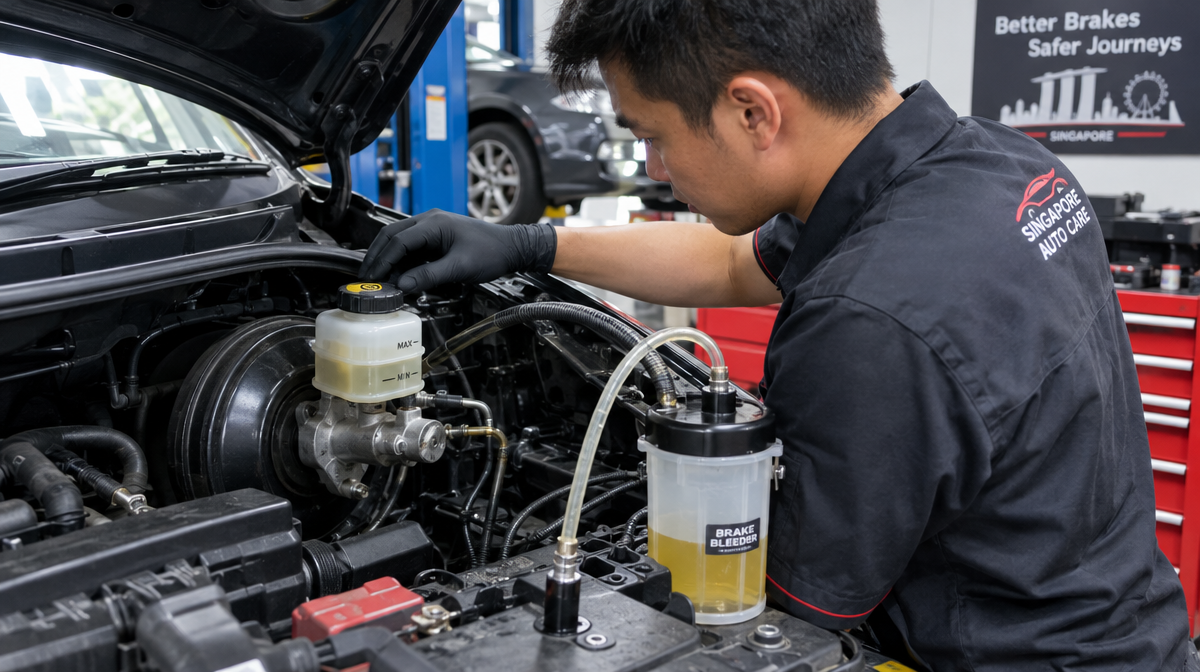
Brake pads and tyres are easy to remember because you can see them, but brake fluid often receives far less attention. This hydraulic fluid is what transfers the force from your foot on the pedal to the braking components at each wheel. If its condition deteriorates, the brake system may not feel as firm or respond as consistently as it should.
For Singapore drivers, a brake-fluid change is a small but important part of sensible vehicle maintenance. Heavy traffic, frequent stop-start driving and a hot, humid environment can all make it worthwhile to follow a planned service interval rather than waiting for a problem. Here is how to understand the timing, the warning signs and the right questions to ask at a workshop.
What brake fluid does in your car
Most passenger cars use a hydraulic braking system. When you press the brake pedal, the master cylinder pressurises brake fluid in sealed lines. That pressure operates the calipers or wheel cylinders, which then apply the pads or shoes against the rotating braking surface.
Brake fluid needs to remain stable under pressure and heat. It must also flow properly in varying temperatures and protect internal parts from corrosion. In many cars, the fluid is glycol-based and is designed to absorb small amounts of moisture over time. This property helps prevent free water from pooling in one area, but it also means the fluid can gradually become less effective as moisture content increases.
How often should brake fluid be changed
The best starting point is your vehicle owner’s manual or service schedule. Manufacturers specify different intervals depending on the brake-fluid type and the design of the braking system. A commonly seen guideline is a replacement every two years, though some vehicles may specify a different period or mileage interval.
Do not rely on a single general rule if your manual says otherwise. A workshop can also test the fluid’s condition as part of routine servicing. If there is uncertainty, ask what method was used to assess it and whether the recommended work follows your manufacturer’s schedule.
- Follow the interval stated by the vehicle manufacturer first.
- Consider the car’s age, service record and use pattern if the history is incomplete.
- Have the fluid checked during scheduled servicing, especially if the car is more than a few years old.
- Use only the brake-fluid specification approved for your vehicle.
Why moisture in brake fluid matters
Brake systems are exposed to repeated heating and cooling. Over time, moisture can enter through normal ageing of components and during servicing. As moisture content rises, the fluid’s boiling point can fall. Under sustained braking, overheated fluid is less desirable because it can affect pedal feel and braking performance.
Moisture may also contribute to corrosion inside parts of the hydraulic system. Those parts are not always visible during a quick visual inspection. Replacing old fluid at the recommended interval is therefore about maintaining the system as a whole, not simply improving the colour of the fluid in the reservoir.
Signs that deserve a brake inspection
Brake fluid usually does not announce itself as clearly as a worn tyre. Still, certain symptoms should not be ignored. They do not automatically prove that the fluid is the cause; worn pads, a leak, air in the lines, tyre issues and other faults can produce similar changes. They are, however, good reasons to arrange a prompt inspection.
- A pedal that feels unusually soft, spongy or travels farther than normal.
- A brake warning light or ABS warning light that remains on.
- Brake-fluid level below the minimum mark, particularly if it drops again after topping up.
- Reduced confidence in braking response, vibration, pulling or unfamiliar noises.
- Visible wetness around brake lines, calipers or the master cylinder.
If the brake warning light appears, the pedal suddenly changes, or you suspect a fluid leak, avoid treating it as a routine maintenance issue. Have the car assessed by a qualified workshop as soon as it is safe to do so. Do not continue driving merely to see whether the symptom disappears.
Brake-fluid change versus a top-up
A top-up and a fluid replacement are not the same service. Topping up raises the level in the reservoir, but it does not remove old fluid or address why the level was low. In many disc-brake systems, the level can gradually fall as pads wear because the caliper pistons sit farther out. A low level may therefore be a prompt to inspect pad wear, rather than an automatic instruction to add fluid.
A proper brake-fluid replacement, often called a flush or bleed service, is intended to renew the old fluid throughout the hydraulic circuit. The procedure should be carried out carefully using the correct fluid and a method suitable for the vehicle. Some modern cars have electronic braking systems that may require a particular service procedure, so this is work best left to a competent technician.
Choosing the correct fluid specification
Brake fluids are commonly labelled with specifications such as DOT 3, DOT 4 or DOT 5.1. These labels are not a universal invitation to interchange products. Your owner’s manual or reservoir cap will state the required specification. The correct choice depends on the vehicle’s system and manufacturer guidance.
Never assume that a higher-numbered fluid is automatically a better upgrade, and do not mix products unless the manufacturer permits it. DOT 5 silicone fluid, for example, is different from the glycol-based fluids used in most ordinary passenger cars. Using an unsuitable product can create avoidable servicing complications. When booking service, provide the car model and ask the workshop to confirm the fluid specification they will use.
A simple maintenance checklist for Singapore drivers
- Check the manufacturer’s service booklet or digital service record for the stated brake-fluid interval.
- Include brake-fluid condition in your regular servicing discussion, rather than waiting for a warning light.
- Tell the workshop about any changes in pedal feel, noises, pulling or warning lights.
- Ask whether brake pads, discs, hoses and fluid level were inspected at the same time.
- Keep the invoice and note the date, mileage and fluid specification used.
This record is useful at the next service and gives future owners a clearer picture of how the vehicle has been maintained.
Frequently asked questions about brake fluid
Can I tell whether brake fluid is old by its colour
Colour alone is not a reliable condition test. Fluid can darken with age, but a workshop should use the manufacturer’s interval and an appropriate assessment method rather than appearance alone.
Is brake fluid replacement included with every oil change
Not usually. Engine-oil and brake-fluid intervals are separate. Confirm what is included in a service package and compare it with your car’s maintenance schedule.
Can I drive if the brake-fluid level is low
A low level needs investigation. It may be related to pad wear or a leak. If the brake warning light is on or pedal feel has changed, arrange an inspection promptly and avoid unnecessary driving.
How long does a brake-fluid change take
The time varies by vehicle and workshop procedure. Cars with more complex brake systems may need additional steps. A workshop can give an estimate after identifying the model and the work required.
The sensible approach
Brake fluid is inexpensive compared with the role it plays. Following the correct service interval, using the approved specification and responding promptly to warning signs help support predictable braking performance. Pair the fluid change with regular checks of pads, discs, tyres and brake hardware, and you will have a more complete picture of your car’s roadworthiness.
Key Takeaways
- What brake fluid does in your car
- How often should brake fluid be changed
- Why moisture in brake fluid matters
- Signs that deserve a brake inspection
Got a Question? Ask Edwin
Edwin Garage is in Ang Mo Kio. We serve Hougang, Yio Chu Kang, Serangoon & surrounding areas.
WhatsApp Edwin Book Appointment