An engine knocking or tapping noise may come from abnormal combustion, inadequate lubrication, a belt-driven accessory or worn internal parts. Sound alone cannot establish the cause or whether driving is safe; even a light or intermittent tap deserves assessment if new or unexplained. A deep or loud knock, oil-pressure warning while the engine is running, overheating, smoke, fuel smell, severe vibration or sudden power loss means stop safely, switch off if safe and arrange recovery rather than driving on.
We are Edwin Garage, a car workshop in Ang Mo Kio. This guide helps you describe the sound, decide whether to keep driving, and know what the workshop should check. It is a guide, not a diagnosis: the same sound can have different causes.
Is it safe to keep driving with an engine knock?
Stop and switch off if any of these happen:
- A deep, heavy knock that gets faster as the revs rise.
- The oil pressure warning light is on.
- Burning smell, smoke, or the temperature gauge climbing.
- Sudden loss of power.
Arrange recovery rather than driving on. For suspected fire, stop safely, switch off if safe, evacuate everyone away from the vehicle and traffic, and contact SCDF on 995 for fire or immediate danger. Do not open the bonnet, restart or touch hot/leaking components. A light tapping that fades when warm is not proof of safety: avoid deliberate revving or driving to reproduce it, and seek advice before continuing. See also the engine oil pressure warning light.
What does the sound tell you?
Use the table to match what you hear. It narrows the possibilities, it does not confirm them.
| What you notice | What it can point to | What to do |
|---|---|---|
| Light metallic rattle when accelerating or on a slope | Abnormal combustion/detonation is possible; unsuitable fuel or other engine-control/combustion faults need assessment. Sound alone does not identify failed spark plugs. | See spark plug replacement |
| Tapping on a cold start that fades when warm | Lubrication, valve-train, timing or other component issues are possible; fading when warm does not confirm the cause or safety | Seek advice before continuing; check oil only under the safe conditions below. Do not rev or repeat cold starts to test it. |
| Tapping with the oil light on | Low oil or low oil pressure | Stop safely, switch off and arrange recovery. Do not continue or restart to see if the light clears. |
| Knocking with shaking or jerking | A misfire or mechanical fault is possible; severe vibration or power loss requires safe stopping and recovery | See engine misfiring and jerking |
| Deep knock that follows engine speed | Worn internal parts such as bearings | Stop driving and arrange recovery |
| Knock with temperature rising | Overheating damage risk | Stop. See engine overheating causes |
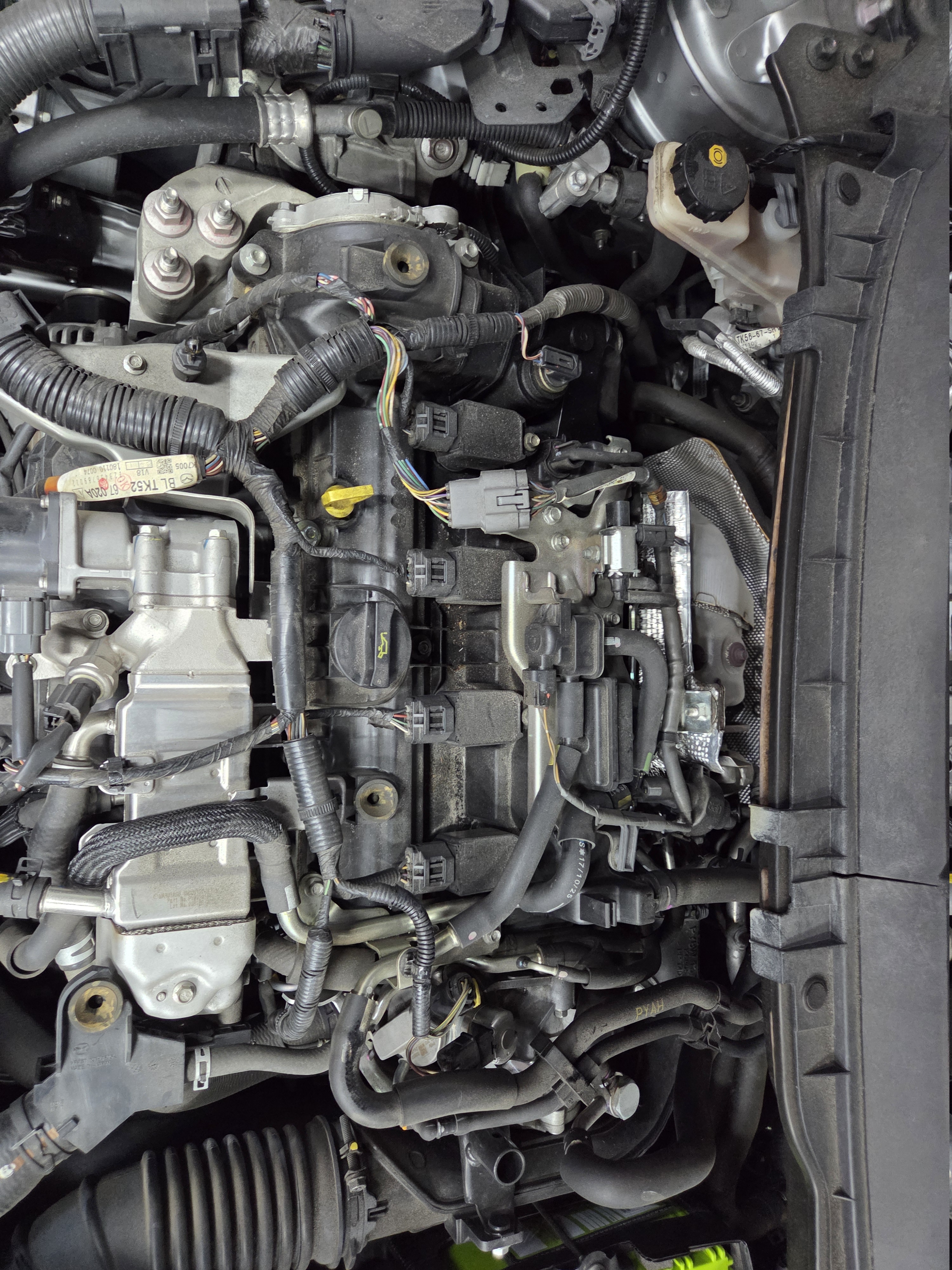
Check the oil first
Only when safely parked away from traffic, with no suspected fire, fuel leak or overheating, check the oil level using the vehicle manual’s procedure. Some cars use an electronic reading rather than a dipstick. Keep clear of hot or moving components; never open a hot cooling-system cap. If oil is low, use only the specified oil and quantity and avoid overfilling, but topping up does not establish why it was low or make a knocking engine safe. An oil-pressure warning with the engine running requires stopping and switching off: do not restart merely to check whether it clears. A normal level does not rule out low pressure or internal damage. See what happens if you skip an engine oil change.
Cold start or warm engine?
Note when the noise happens. A sound only on a cold start points in a different direction from one that appears when the engine is hot or under load. This detail helps the workshop a lot.
What should the workshop check?
- Engine oil level, condition and pressure.
- A scan for stored fault codes, including misfire.
- Spark plugs and ignition parts.
- Belts, tensioner and accessories that can tap or rattle.
- First assess whether running the engine is safe. Localise the sound with suitable equipment only if appropriate; avoid unnecessary running, revving or road testing when oil-pressure loss or internal damage is suspected.
Ask for the cause and a quote before you approve any work. Our guide to what a diagnostic fee covers explains how this works at Edwin Garage.
Book an engine check
Inspections and repairs at Edwin Garage in Ang Mo Kio are by appointment, booked online. WhatsApp 9785 6612 is for enquiries. Open 10am to 8pm, Monday to Saturday; closed Sundays. See our car servicing and repair page.
WhatsApp Edwin — engine noise diagnosis enquiries
Routine servicing and diagnostic inspections in Ang Mo Kio are appointment-only, booked exclusively online; WhatsApp is for enquiries, not booking. Genuine breakdown, overheating, accident and no-start emergencies may be exceptions subject to availability, not a promise of immediate attendance. Do not drive an unsafe vehicle to a booking.
Frequently asked questions
What causes an engine knocking noise?
A knocking or tapping sound can come from low or wrong engine oil, fuel burning unevenly (often heard as pinging when you accelerate), carbon build-up, a weak ignition spark, a worn belt tensioner or accessory, or worn internal parts such as bearings. The sound alone is not enough to tell which, so it needs a proper check.
Is it safe to drive with an engine knocking?
Sound alone cannot establish safety, even if a light tap fades when warm. Stop safely and seek advice for a new or unexplained noise. A deep or loud knock, oil-pressure warning while running, overheating, smoke, fuel smell, severe vibration or sudden power loss means switch off if safe and arrange recovery, not continued driving. Do not rev or restart to reproduce it. For suspected fire, evacuate away from the vehicle and traffic and contact SCDF 995; do not open the bonnet.
What is the difference between knocking and pinging?
Pinging is a light, metallic rattle heard mainly when you accelerate or climb a slope, and is linked to how the fuel burns. A deep knock that follows engine speed, and gets worse as revs rise, is more serious and can point to worn internal parts.
Can low engine oil cause a knocking noise?
Low oil can cause inadequate lubrication and noise, but a normal level does not rule out low pressure or internal damage. Check the level only when safely parked and conditions are safe, following the vehicle manual. Use only the specified oil and avoid overfilling. An oil-pressure warning with the engine running means stop safely, switch off and arrange recovery; do not restart or drive after a top-up to see whether it clears.
Will a spark plug change fix an engine knock?
Only if diagnosis identifies an ignition or spark-plug specification/condition problem contributing to the symptoms. Pinging and mechanical knocking have different possible causes, and a plug change will not repair worn internal parts. Diagnosis should come before replacement; do not assume a noise proves the plugs are faulty.
What should I tell the workshop about the noise?
Say when it happens (cold start, warm engine, accelerating, idle), whether it follows engine speed, whether any warning light is on, and when the oil was last changed. Ask for the cause and a quote before you approve any work.
Key Takeaways
- A deep knock, the oil light or a burning smell means stop and arrange recovery.
- Check oil only when safely parked and conditions allow; a normal level or a top-up does not establish driving safety.
- Note when the noise happens: cold start, warm, accelerating or idle.
- Get a diagnosis before replacing parts.
Engine making a noise?
Edwin Garage is in Ang Mo Kio, serving Hougang, Yio Chu Kang, Serangoon and nearby areas. Inspections and repairs are by online appointment. WhatsApp 9785 6612 is for enquiries.
Book Appointment