
A squeal when you start your car can come from the accessory belt slipping, but the belt is not automatically the faulty part. A weak tensioner, misaligned pulley, contamination or a dragging accessory can produce similar noises. A short squeal also does not establish that continued driving is safe. Warning lights, temperature changes and the condition of the drive system matter more than the noise disappearing.
At Edwin Garage, our approach to car servicing and repair in Ang Mo Kio is to identify the source before proposing parts. This guide covers external accessory-drive belts on combustion-engine cars, not high-voltage systems or every hybrid arrangement. Describe the symptom and let the vehicle's actual belt layout guide the assessment.
Which belt is making the noise?
The accessory belt transfers engine rotation to equipment such as an alternator or belt-driven aircon compressor. Depending on the vehicle, it may also drive a water pump or hydraulic steering pump. Some cars use several belts; others have electrically driven accessories. The workshop must establish what your particular belt actually operates.
This is different from an engine timing belt, which synchronises internal engine components. An external squeal does not prove a timing-belt problem, and replacing an accessory belt does not renew the timing system. Check the correct maintenance requirements separately in our timing-belt replacement guide.
Clues worth recording without touching the engine
- First start only: note whether the car sat overnight and how long the sound lasted.
- Wet-weather association: record rain or recent washing, without assuming moisture is the whole explanation.
- Aircon association: mention whether normal aircon operation changes the noise; do not repeatedly provoke it.
- Other symptoms: note charging warnings, unusual steering effort, burning smells or rising temperature.
- Sound pattern: a sustained squeal, rhythmic chirp and grinding noise are useful descriptions, not diagnoses.
If safe, record the sound from the cabin while parked. Never lean over a running belt to obtain a better recording. For an owner coming from Hougang or Serangoon, the useful information is what happened before and after the sound—not a risky attempt to reproduce it on the way to our Ang Mo Kio workshop.
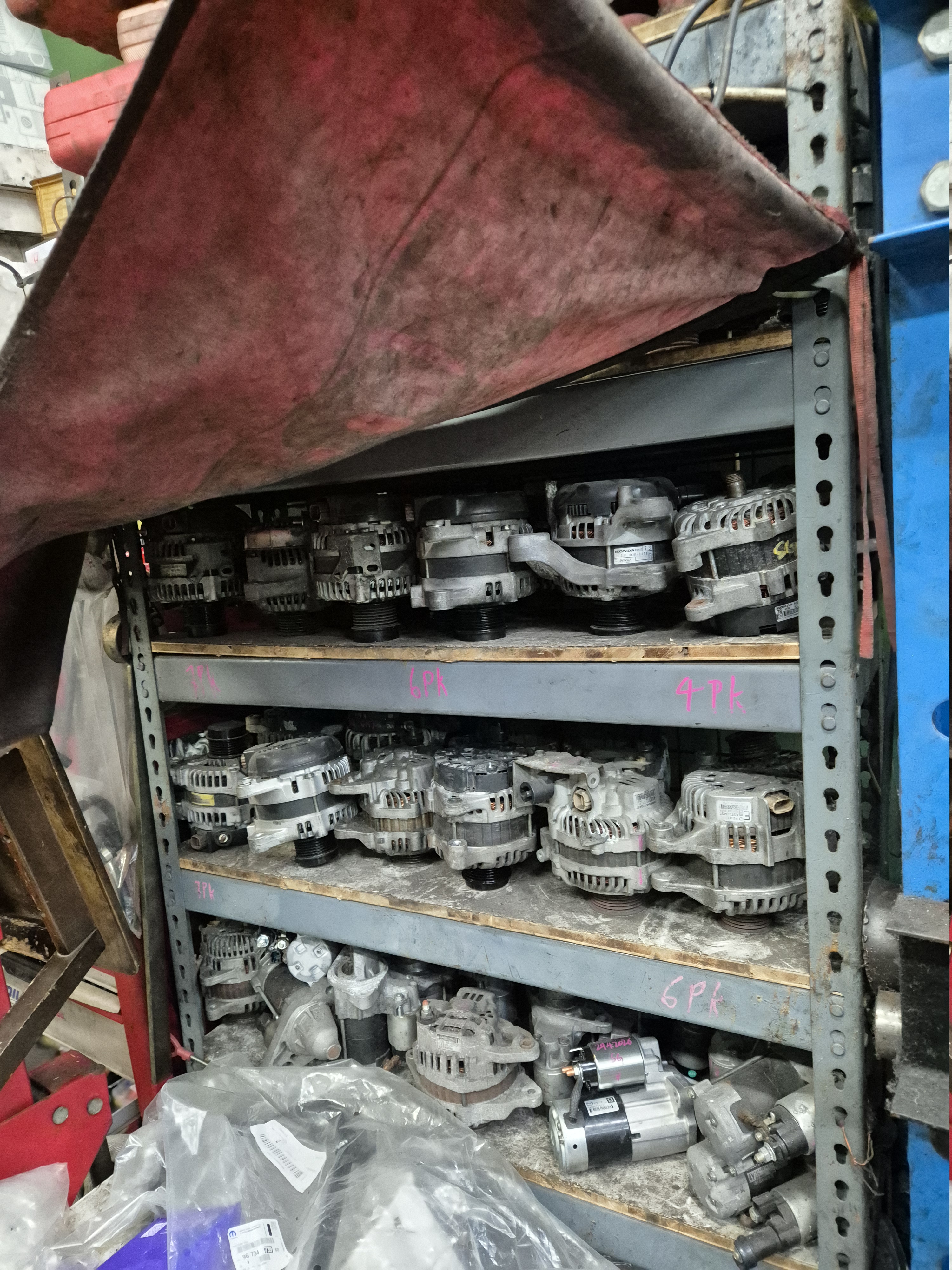
Authentic Edwin Garage workshop photograph of alternators and other stored components. Alternators are one possible accessory-drive load; this stock photograph does not show a diagnosed noisy bearing or prove any component needs replacement.
What can cause startup belt squeal?
Belt grip and tension are an initial area to assess. Wear, an incorrect belt specification, poor seating or inadequate tension can allow slip when load changes. An automatic tensioner can lose control or develop a mechanical problem. A manually adjusted drive needs the manufacturer's specified adjustment, not simply “as tight as possible”. Excess tension can damage bearings.
Alignment and pulley condition come next in the investigation. An idler bearing, tensioner pulley or accessory pulley can be rough, loose or out of line. Certain alternators use an overrunning pulley whose operation needs a specific check. A crankshaft pulley damper may also deteriorate. These are possibilities to test, not a claim that every startup squeal requires a full set of pulleys.
Contamination and accessory resistance also matter. Oil or coolant on the belt can change its behaviour and may require fixing the leak as well as replacing affected parts. A compressor or alternator problem can increase drive resistance. Singapore's wet weather and hot engine compartments provide useful operating context, but neither proves the cause. There is no reliable universal cause ranking without inspecting the vehicle.
When should you stop driving?
Pull over somewhere safe and switch off if squealing is accompanied by smoke, a strong burning-rubber smell, overheating, sudden heavy steering or visible belt damage noticed with the engine safely off. Do not keep restarting to see whether the symptom clears. If you are stopped in a dangerous location, prioritise getting people away from traffic and arranging assistance.
A charging warning with belt noise can mean an alternator is no longer being driven properly, but electrical faults are also possible. See our alternator and charging-system warning guide. If temperature rises, follow the stop-driving advice in our engine overheating guide; never open a hot cooling system. Whether the same belt drives the water pump must be checked for that vehicle.
A brief squeal without other symptoms still deserves an assessment. Its duration alone cannot establish roadworthiness. If you cannot tell whether a warning is serious, describe it before travelling rather than treating this article as clearance to drive.
What a proper workshop assessment involves
- Confirm the operating conditions. Identify the vehicle, service history, recent repairs and whether a cold start is needed. An overnight symptom may require an agreed arrival and testing plan.
- Inspect the drive with the engine safely stopped. Check routing, belt specification, rib condition, tracking, contamination and accessible pulleys. Covers and access differ by model.
- Evaluate tension and driven components. Where appropriate, controlled technician tests and belt removal help distinguish belt slip from bearing or accessory problems. Some belt-off running tests are unsuitable for particular engines.
- Explain the findings and scope. Agree what evidence supports replacement, any further dismantling required and the limits of a symptom that has not reproduced.
If the noise appears only sometimes, our intermittent-fault preparation guide explains how a symptom record helps. Aircon-related noises can also overlap: our compressor-noise guide separates pulley, clutch and internal compressor possibilities. An aircon association is a clue, not permission to replace the compressor without checks.
Repair options and an itemised SGD estimate
The remedy may be a correctly specified belt, tensioner or pulley repair, correction of alignment, a leak repair, or work on a confirmed faulty accessory. Replacing only the belt can leave the original cause in place. Conversely, replacing every driven component without supporting evidence is not a diagnosis. Some stretch-fit belts need a prescribed installation method and replacement after removal.
Ask for an estimate in SGD separating assessment, access labour, belt part number, confirmed pulley or tensioner work, any accessory repair, consumables and applicable tax. Access through an undertray or wheel arch can affect labour. Parts availability and the precise engine variant also matter. No single published price can represent all these arrangements, so we do not invent a market range.
Agree the approval limit before additional work. If several recommendations arise, our repair-priority guide explains how to separate safety, necessary work and optional improvements. After repair, ask which operating conditions were checked and whether a later cold-start review remains necessary.
If the belt was recently replaced, provide the invoice and explain whether the sound existed beforehand. A new belt does not rule out an installation issue, an incorrect length or a pre-existing pulley problem. Equally, noise appearing after a service is not proof that the service caused it. Compare the original symptom with the current findings. Ask whether any removed belt must be renewed, and whether a suspected fluid leak needs separate authorisation before the drive can be restored correctly.
Prevention: avoid shortcuts that hide the symptom
Follow the vehicle's inspection and replacement guidance rather than a universal mileage rule. Raise recurring noises during scheduled visits and report leaks promptly. A belt can wear without dramatic cracking, so a quick glance is not a complete condition check. Correct fitment and routing matter after any nearby repair.
Do not spray lubricant, belt dressing or household products onto the drive. Quieting a noise temporarily does not establish a repair and can contaminate components. Never use your fingers, a rag or a tool near moving belts. Engine-off inspection still requires care: cooling fans can start unexpectedly, and stored tension can cause injury during removal.
Book a belt-noise assessment before buying parts
Routine checks, inspections and diagnostics are appointment only. Book your appointment online exclusively. For questions about the symptom or visit preparation, WhatsApp Edwin for enquiries; WhatsApp is not a booking channel. Mention if a first-start noise needs a cold vehicle.
We are at Blk 5032 Ang Mo Kio Industrial Park 2 #01-295, convenient for Yio Chu Kang. Hours are Monday–Saturday, 10am–8pm; closed Sundays. Genuine urgent breakdown, overheating, accident and no-start situations may be exceptions subject to availability, not a promise of immediate attendance. Browse our Singapore car repair guides for related preparation.
Is a short squeal on startup always a worn belt?
No. Belt slip, inadequate tension, alignment, contamination or a driven-component problem can sound similar. The sound disappearing does not identify the faulty part or confirm driving safety.
Can I spray something on the belt to stop the noise?
Do not apply lubricant or household sprays. They can contaminate the drive and mask rather than resolve the cause. Arrange an assessment and keep hands and tools away from moving components.
Does accessory-belt replacement include the timing belt?
No. They serve different purposes and have separate service requirements. Confirm the exact belt and associated parts included in the written scope for your engine.
Must I replace the alternator if the belt squeals?
No. An alternator or its pulley is only one possibility. The workshop should check the belt, tensioner, alignment and relevant accessories before recommending alternator repair or replacement.
Can I drive to the workshop with belt noise?
A noise description alone cannot establish that driving is safe. Stop for smoke, burning smells, overheating, sudden heavy steering or associated warning lights, and arrange assistance. Routine assessments require an online appointment.
Key Takeaways
- No. Belt slip, inadequate tension, alignment, contamination or a driven-component problem can sound similar. The sound disappearing does not identify the faulty part or confirm driving safety.
- Do not apply lubricant or household sprays. They can contaminate the drive and mask rather than resolve the cause. Arrange an assessment and keep hands and tools away from moving components.
- No. They serve different purposes and have separate service requirements. Confirm the exact belt and associated parts included in the written scope for your engine.
- No. An alternator or its pulley is only one possibility. The workshop should check the belt, tensioner, alignment and relevant accessories before recommending alternator repair or replacement.
Got a Question? Ask Edwin
Edwin Garage is located in Ang Mo Kio. Serving Hougang, Yio Chu Kang, Serangoon & surrounding areas.
WhatsApp Edwin Book Appointment📚 More on Car Servicing & Repair
- Car Belt Squeal at Startup in Singapore: What to Check
- Car Repair Priority List in Singapore: Urgent or Can Wait?
- Intermittent Car Faults in Singapore: Prepare for Diagnosis
- Car Aircon Compressor Noise in Singapore: Repair or Replace?
- Alternator Failure: Signs Your Car Battery Keeps Dying