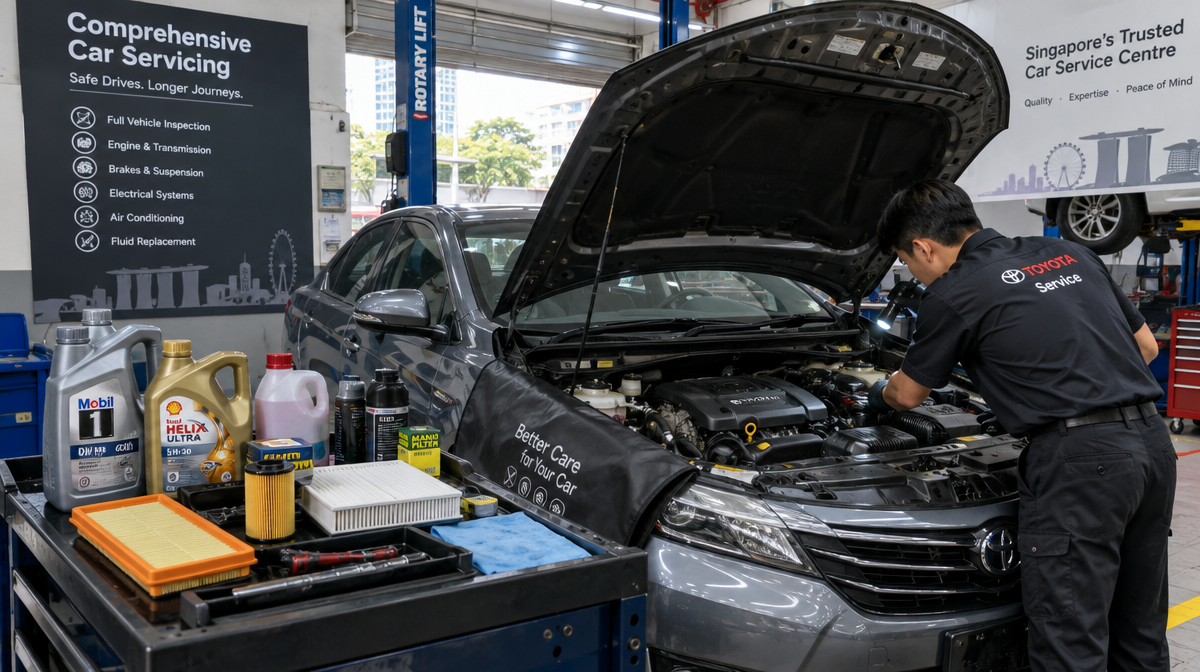
Everything Every Car Owner Should Know About Maintaining Their Vehicle, Avoiding Expensive Repairs and Choosing the Right Workshop
Car servicing is one of the most misunderstood aspects of vehicle ownership. Ask ten different drivers what a "regular service" includes and you'll probably get ten different answers. Some believe servicing simply means changing the engine oil, while others assume replacing every filter at every visit is necessary.
The reality lies somewhere in between.
A professional car service is a structured preventive maintenance programme designed to keep your vehicle safe, reliable and operating efficiently. It is not about replacing as many parts as possible, nor is it about doing the bare minimum. The objective is to inspect the vehicle systematically, replace items that have reached the end of their service life, identify developing problems early and prevent minor issues from becoming major repairs.
At Edwin Garage Automotive, we believe customers deserve more than just an oil change. Every service is an opportunity to assess the overall health of the vehicle, explain our findings honestly and recommend only the work that is genuinely required.
This guide is written from the perspective of experienced workshop technicians who diagnose and repair vehicles every day. Whether you drive a Toyota, Honda, Mazda, Nissan, BMW, Mercedes-Benz, Volkswagen, Audi, Tesla or any other make, the principles of proper servicing remain the same.
Why Regular Car Servicing Is More Important Than Most Drivers Realise
Modern vehicles are engineering marvels. Even an average family car contains thousands of moving components working together under high temperatures, pressure and constant vibration.
Every journey gradually wears these components. Engine oil deteriorates, brake pads become thinner, rubber bushes age, batteries lose capacity and coolant additives become less effective. These changes happen slowly, which is why many drivers do not notice them until a warning light appears or a breakdown occurs.
Routine servicing is designed to identify these issues before they become expensive.
For example, discovering a small coolant leak during a routine inspection is far less costly than repairing an overheated engine. Replacing worn brake pads before they damage the brake discs is significantly cheaper than replacing both pads and discs. Detecting a weak battery before it fails can prevent the inconvenience of being stranded unexpectedly.
Preventive maintenance is not about spending more—it is about spending wisely.
What Exactly Is a Car Service
A proper car service is a comprehensive inspection and maintenance procedure carried out at regular intervals based on time, mileage or both.
Although manufacturers specify different maintenance schedules, a professional service generally includes four key objectives:
- Replacing consumable items that naturally wear out over time.
- Inspecting safety-critical systems.
- Checking the condition of fluids, belts and filters.
- Identifying developing problems before they become major repairs.
Many workshops advertise extremely low servicing prices. While these packages may include fresh engine oil and a new oil filter, they often involve limited inspections.
A thorough service should never be viewed as simply changing oil. It is an opportunity to evaluate the overall condition of the vehicle.
How Often Should You Service Your Car in Singapore
One of the questions we hear most often is:
"Should I service every 10,000 km or every six months"
For most passenger vehicles driven in Singapore, the answer is whichever comes first.
However, this recommendation should not be treated as an absolute rule.
Your ideal service interval depends on several factors:
- Driving distance
- Traffic conditions
- Engine design
- Oil specification
- Vehicle age
- Climate
- Driving style
Why Singapore's Driving Conditions Are Considered Severe
Although Singapore is geographically small, many vehicles operate under conditions that manufacturers classify as "severe service."
These include:
- Frequent stop-and-go traffic.
- Long periods of engine idling.
- High ambient temperatures.
- High humidity.
- Short daily trips where the engine may not reach full operating temperature.
These conditions accelerate oil degradation, increase heat cycles and place additional stress on cooling systems, batteries and automatic transmissions.
This is one reason why regular servicing remains important even for vehicles with relatively low mileage.
What Happens If You Skip Servicing
Many people assume that because the engine still sounds smooth, servicing can safely be delayed.
Unfortunately, mechanical wear is rarely obvious in its early stages.
Engine oil performs several critical functions:
- Lubricates moving components.
- Reduces friction.
- Carries away heat.
- Suspends contaminants.
- Protects against corrosion.
- Helps maintain hydraulic pressure in certain engine systems.
As engine oil ages, it gradually loses these protective properties. Additives become depleted, contaminants accumulate and viscosity changes.
While the oil may still appear relatively clean on the dipstick, its ability to protect internal engine components may already be reduced.
Repeatedly delaying servicing can contribute to accelerated wear of:
- Timing chains.
- Turbochargers.
- Variable valve timing components.
- Camshafts.
- Hydraulic lifters.
- Bearings.
The effects are usually gradual rather than immediate, which is why preventative maintenance is so valuable.
Is Engine Oil Really That Important
Absolutely.
If the engine is the heart of your vehicle, engine oil is its lifeblood.
Modern engines operate under much higher temperatures and tighter tolerances than older engines. Turbocharged engines are especially demanding because the turbocharger itself may rotate at speeds exceeding 150,000 revolutions per minute while being lubricated by engine oil.
Without clean, high-quality oil, these components experience increased friction and heat, accelerating wear over time.
This is why selecting the correct oil specification is just as important as replacing it at the appropriate interval.
Does Expensive Engine Oil Always Mean Better Protection
Not necessarily.
The best engine oil is the one that meets your vehicle manufacturer's required specifications.
Factors to consider include:
- Correct viscosity grade (for example, 0W-20, 5W-30 or 5W-40).
- Required industry approvals.
- Compatibility with emission control systems.
- Driving conditions.
Using an oil that does not meet the manufacturer's specifications may reduce engine protection even if the product itself is premium quality.
When in doubt, consult your owner's manual or seek advice from a qualified workshop familiar with your vehicle.
Common Myths About Car Servicing
Myth 1: "The Engine Oil Still Looks Clean."
Oil colour alone does not indicate whether it is still providing adequate protection. Many contaminants are microscopic, and additive depletion cannot be judged by appearance.
Myth 2: "I Hardly Drive My Car, So I Don't Need Servicing."
Even vehicles with low mileage experience ageing of fluids, rubber components and batteries. Time-based servicing remains important.
Myth 3: "Servicing Means Replacing Everything."
A professional workshop replaces components based on their condition and manufacturer's recommendations, not simply because the vehicle has reached a certain age.
Myth 4: "Every Workshop Performs the Same Service."
Service quality varies significantly. Two workshops may advertise identical service packages while performing very different levels of inspection.
What Should Be Included in Every Regular Car Service
A proper service is much more than an engine oil change. It should include a systematic inspection of the vehicle's major systems.
During a routine service, experienced technicians typically inspect:
- Engine oil and oil filter.
- Air filter condition.
- Cabin air filter.
- Brake pad thickness.
- Brake disc condition.
- Brake fluid level.
- Coolant level and condition.
- Battery health.
- Drive belts.
- Tyre pressure.
- Tyre tread depth.
- Suspension components.
- Steering components.
- Exterior lighting.
- Visible fluid leaks.
These inspections help identify potential issues early, allowing repairs to be planned before they become urgent or significantly more expensive.
In Part 2 of this guide, we'll examine each of these inspection items in detail, explaining exactly what technicians look for, why each component matters, and how early detection can save you from costly repairs.
Key Takeaways
- Why Regular Car Servicing Is More Important Than Most Drivers Realise
- What Exactly Is a Car Service
- How Often Should You Service Your Car in Singapore
- What Happens If You Skip Servicing
Got a Question? Ask Edwin
Edwin Garage is in Ang Mo Kio. We serve Hougang, Yio Chu Kang, Serangoon & surrounding areas.
WhatsApp Edwin Book Appointment📚 Related Guides from Edwin Garage
- Car Servicing in Singapore: What Every Car Owner Should Know Before Choosing a Workshop
- Car Absorber Replacement: Signs It's Time & What To Expect
- Transmission Problems: Warning Signs Singapore Drivers Should Know
- Brake Wear in Singapore: How to Tell It's Time to Replace Your Brake Pads