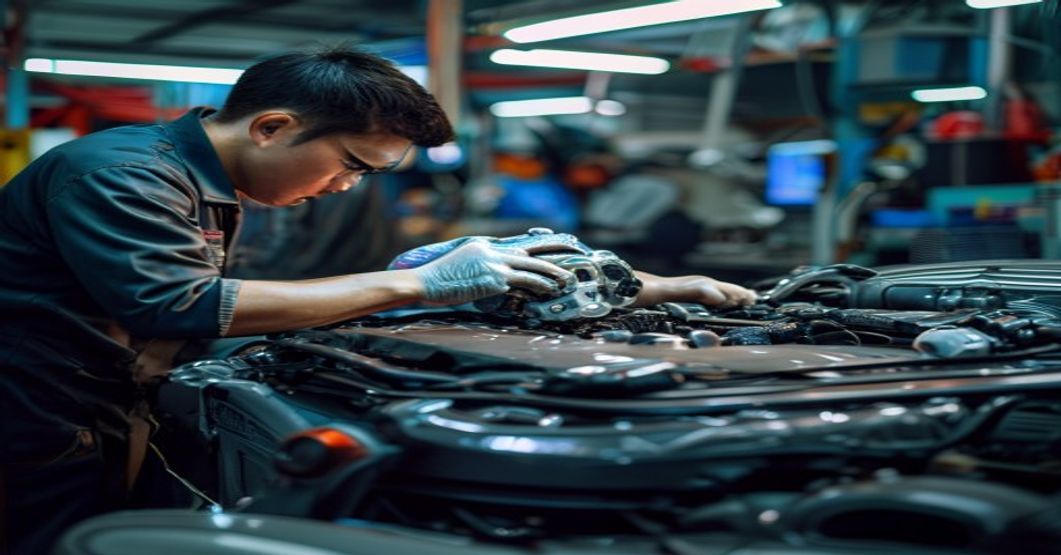
One of the more serious problems we've been seeing at our Ang Mo Kio workshop in recent years is coolant mixing with oil on Subaru vehicles. It affects several popular models here in Singapore — the Subaru XV, Subaru Forester and Subaru Impreza — and when it happens, most owners understandably panic. Milky coolant in the reservoir, a strange oily film on the radiator cap, or that tell-tale brown gunk under the oil filler — these are warning signs that something has gone wrong inside the cooling system.
What concerns us at Edwin Garage is that many workshops jump straight to recommending a full engine overhaul the moment they see oil in the coolant. In our experience, that's often the wrong call — and it costs owners thousands of dollars unnecessarily. Every repair should start with a proper diagnosis. Let us explain what we actually look for.
Warning Signs: What Does Coolant Mixing with Oil Look Like
- Milky or creamy brown coolant in the reservoir or radiator cap
- Oily film or residue floating on top of coolant
- Coolant level dropping without any visible external leak
- Oil level rising or appearing thicker than normal
- Overheating or temperature gauge running higher than usual
- White or grey smoke from the exhaust under normal driving
- Sweet smell from the engine bay or exhaust
- Transmission slipping or hesitation (in ATF contamination cases)
If you're noticing any combination of these symptoms on your Subaru in Singapore — whether you're stuck in traffic on the CTE, crawling through Hougang, or parked under the harsh afternoon sun at an HDB carpark — don't ignore them. This problem gets much more expensive the longer it's left.
We recently had a Subaru Forester come in from Yio Chu Kang. The owner noticed the coolant reservoir had turned a murky brown colour after a few weeks of CTE stop-and-go commuting. He'd been quoted a full engine overhaul by another workshop before he came to us. After a proper diagnostic, we found the fault was actually at the engine oil cooler — not the head gasket. The repair was significantly more straightforward and far less costly than what he'd been told to expect.
The Critical First Question: Is It Engine Oil or Transmission Fluid
This is the most important step in the entire process, and it's where many workshops get it wrong. Engine oil and automatic transmission fluid (ATF) can both contaminate the cooling system, and while they may look similar inside the coolant reservoir, the source — and the repair — is completely different.
We always identify the type of oil contamination before recommending any repair. The distinction matters enormously:
Engine Oil Entering the Coolant — On Subaru's flat-four boxer engine, a common source of engine oil contamination is the engine oil cooler or the oil sump gasket area. Because of the unique horizontal layout of the boxer engine, oil cooler failures here can push oil directly into the cooling passages. Many workshops see this and immediately conclude it's a head gasket failure — but that's not always true. In many cases we handle at our workshop, the repair can be done by accessing the lower section of the engine without pulling the cylinder heads or dismantling the head gasket entirely. Proper diagnosis prevents thousands of dollars in unnecessary work.
Transmission Fluid Entering the Coolant — This is the other common failure point that gets missed. On certain Subaru models with automatic transmissions, the gearbox oil cooler is integrated directly inside the radiator. When this internal cooler fails, ATF mixes with engine coolant. If ignored, the contaminated coolant circulates through the transmission cooler lines and begins destroying the gearbox itself — turning a relatively contained repair into a full transmission rebuild. If you're experiencing transmission slipping or hesitation alongside milky coolant, this is a strong indicator.
What Causes This in Singapore Subarus
Singapore's climate and driving conditions accelerate wear on cooling system components more than most drivers realise:
- Oil cooler seal failure — Prolonged heat cycling (common with Singapore's 30–35°C ambient temperatures and heavy traffic) degrades rubber seals and gaskets inside the oil cooler over time
- Radiator-integrated ATF cooler failure — The internal partition inside the radiator weakens with age, especially with the constant thermal expansion and contraction from stop-and-go driving on the PIE or CTE
- Deferred coolant servicing — Old, degraded coolant becomes acidic and eats away at metal cooling passages and gasket surfaces from the inside
- Head gasket failure — Less common than most assume, but still possible on higher-mileage Subaru engines, particularly if the car has had overheating episodes in the past
- Oil sump or valley gasket leak — Specific to the boxer engine layout, where the gasket position makes oil-to-coolant crossover possible
Common Misconceptions About This Problem
Misconception #1: Milky coolant always means a blown head gasket.
This is the most common mistake we see. Yes, head gasket failure can cause oil and coolant to mix — but so can a failed oil cooler, a cracked radiator ATF cooler, or a sump gasket leak. Assuming it's always the head gasket leads to unnecessary engine overhauls. We diagnose first, then repair what's actually broken.
Misconception #2: Just drain and refill the coolant and it's fixed.
Even after repairing the source of the leak, oil residue remains throughout every hose, passage, heater core and radiator channel in the cooling system. Simply topping up with fresh coolant leaves contamination behind — the old oil continues to circulate, degrades the new coolant and reduces cooling efficiency. A proper chemical flush is non-negotiable.
How We Repair It at Edwin Garage
Our repair process is systematic — and repairing the leak is only the beginning:
- Accurate diagnosis — Identify oil type (engine oil vs ATF), confirm the source using pressure tests, visual inspection and fluid analysis
- Repair the source — Replace the failed oil cooler, radiator ATF cooler, or gasket — only what's actually failed, nothing more
- Full hose inspection — Oil softens and degrades rubber. We inspect every coolant hose (upper radiator, lower radiator, heater hoses, bypass hoses, oil cooler hoses) and replace any that show internal deterioration. A burst hose on the CTE is the last thing you want.
- Chemical cooling system flush — We use specialist cleaning chemicals to remove oil residue from the entire system, including the engine block passages, heater core and radiator
- Inspect related components — Radiator, PCV valve, reservoir tank, cooling passages and connections are all checked
- Refill with correct coolant specification — Subaru has specific coolant requirements; we use the right fluid for your model
- Bleed and pressure test — Proper cooling system bleeding prevents air pockets; pressure testing confirms there are no remaining leaks
- Road test and temperature monitoring — We drive the vehicle and monitor operating temperature, cooling fan operation and check for any residual leaks before returning it to you
How Much Does This Repair Cost in Singapore
Repair costs vary depending on the actual source of the problem. An oil cooler replacement with a chemical flush is substantially less expensive than a head gasket job — which is exactly why diagnosis matters so much.
Broadly, here's what affects the price:
- Type of leak source (oil cooler vs ATF cooler vs head gasket)
- Extent of coolant contamination and number of hoses that need replacement
- Subaru model and engine variant (XV 2.0, Forester 2.0/2.5, Impreza 1.6/2.0)
- Whether the transmission has already been contaminated (in ATF cooler failure cases)
- Parts availability — genuine vs aftermarket
For a rough guide: oil cooler repairs typically range from a few hundred dollars, while a full head gasket job on a Subaru boxer can run into the thousands. Getting a proper diagnosis first ensures you're only paying for what's actually needed. You can also read our guide on coolant leaks and proper diagnosis to understand what's involved.
Prevention: How to Avoid This Problem on Your Subaru
- Service your coolant on schedule — don't let it run past the manufacturer's interval. Old coolant becomes acidic and attacks cooling system components
- Check your coolant reservoir regularly — a quick visual check monthly can catch contamination early before it spreads
- Don't ignore overheating — even a single serious overheating event can weaken head gaskets and cooling system seals on a Subaru boxer engine. See our guide on what to do when your engine overheats
- Service your automatic transmission fluid on schedule — neglected ATF accelerates cooler degradation
- Address any coolant top-up requirements promptly — if you're refilling coolant without a visible leak, something is consuming or losing it internally
When Should You Seek Help Immediately
Bring your Subaru in immediately if you notice:
- Coolant reservoir is visibly milky, brown or has an oily surface
- Temperature gauge is running higher than normal or fluctuating
- Oil level rising unexpectedly between services
- Transmission is slipping or hesitating alongside coolant changes
- White smoke from the exhaust that doesn't clear after warmup
- Sweet smell from the engine bay — coolant has a distinctive sweet odour
- You've had a recent overheating incident
Catching this early can be the difference between a contained oil cooler repair and a full engine or transmission rebuild. In Singapore's heat, delaying cooling system problems almost always makes them worse.
FAQ: Subaru Coolant and Oil Mixing
Can I still drive my Subaru if the coolant looks milky
We strongly advise against it. Milky coolant means the cooling system is compromised. Continued driving risks overheating, which can warp the cylinder head or cause further engine damage. Get it checked immediately — it's far cheaper to diagnose early than to repair the consequences of driving on a contaminated system.
Does coolant mixing with oil always mean the head gasket has failed
No. This is the most common misconception we encounter at our Ang Mo Kio workshop. On Subaru models, oil cooler failure, the integrated radiator ATF cooler, or sump gasket issues can all cause the same symptom. A proper diagnosis — not an assumption — should determine the repair. We've saved many Subaru owners from unnecessary engine overhauls by diagnosing the actual source correctly.
How long does the repair take
It depends on the fault. An oil cooler replacement with a chemical flush can typically be completed within one to two working days. A head gasket job on a Subaru boxer engine is more involved and may take three to five days depending on parts availability. We'll give you a clear timeline after diagnosis.
Is the chemical flush really necessary
Yes — absolutely. Once oil has circulated through a cooling system, it coats every hose, passage and component internally. Simply draining and refilling the coolant leaves a film of oil residue behind. That residue continues to contaminate fresh coolant, reduces cooling efficiency and can cause ongoing problems. The chemical flush is not optional — it's a core part of the repair.
Does this problem affect all Subaru models
The Subaru XV, Forester and Impreza are the models we see most commonly affected in Singapore, primarily due to their widespread popularity and age profile in the local market. The boxer engine design and the radiator-integrated ATF cooler on automatic variants are common to these models. That said, any Subaru with a boxer engine and integrated ATF cooler is potentially susceptible, particularly as the vehicle ages.
At Edwin Garage, we understand Subaru boxer engines and their quirks. If your Subaru XV, Forester or Impreza has shown any signs of oil and coolant mixing, don't wait and hope it resolves on its own — it won't. Book your appointment online at sggarage.com. For enquiries, WhatsApp us at 97856612. Edwin Garage — Ang Mo Kio, open 10am–8pm, closed Sundays.
Key Takeaways
- Warning Signs: What Does Coolant Mixing with Oil Look Like
- The Critical First Question: Is It Engine Oil or Transmission Fluid
- What Causes This in Singapore Subarus
- Common Misconceptions About This Problem
Got a Question? Ask Edwin
Edwin Garage is in Ang Mo Kio. We serve Hougang, Yio Chu Kang, Serangoon & surrounding areas.
WhatsApp Edwin Book AppointmentMore Mitsubishi & Subaru guides
- Subaru XV Suspension Problems: Common Complaints & Fixes in Singapore
- Subaru Forester Head Gasket Failure: Warning Signs, Repair Cost & Singapore Diagnosis
- Mitsubishi ASX CVT Oil Service Singapore: Why It Matters and How Often to Do It
- Mitsubishi Outlander Aircon Problems: Common Causes & Fixes in Singapore
- Subaru XV, Forester & Impreza: Coolant Mixing with Oil in Singapore — Diagnosis, Causes & Proper Repair
📚 More Mitsubishi & Subaru guides
- Mitsubishi Eclipse Cross Common Problems in Singapore: A Workshop Guide
- Subaru XV Suspension Problems: Common Complaints & Fixes in Singapore
- Subaru Forester Head Gasket Failure: Warning Signs, Repair Cost & Singapore Diagnosis
- Mitsubishi ASX CVT Oil Service Singapore: Why It Matters and How Often to Do It
- Mitsubishi Outlander Aircon Problems: Common Causes & Fixes in Singapore
- Subaru XV, Forester & Impreza: Coolant Mixing with Oil in Singapore — Diagnosis, Causes & Proper Repair