Honda Accord power steering failure is not something to postpone. When the wheel suddenly feels heavy, jerks during a turn or makes a whining sound, the fault may be a simple fluid leak or belt problem—or it may involve the pump, steering rack, sensor or control unit. At our trusted car servicing workshop in Ang Mo Kio, we diagnose the cause before recommending parts.
Accords are comfortable long-distance cars, but Singapore's heat, humidity, tight HDB carpark turns and stop-start traffic put constant load on steering assistance. Drivers from Hougang, Yio Chu Kang and Serangoon often notice the problem first while parking, where low-speed steering needs the most assistance.
What does the Honda Accord power-steering system do?
Power steering reduces the effort needed to turn the front wheels. In a hydraulic Accord, an engine-driven pump pressurises fluid and sends it through hoses to the steering rack. In an electric system, a motor and sensors add assistance according to steering input and vehicle speed. Either system can fail gradually or suddenly.
That distinction matters. Topping up fluid will not repair a leaking hose, and replacing a pump will not fix a damaged rack or an electrical calibration fault. Correct diagnosis starts with the exact Accord generation and a physical inspection.
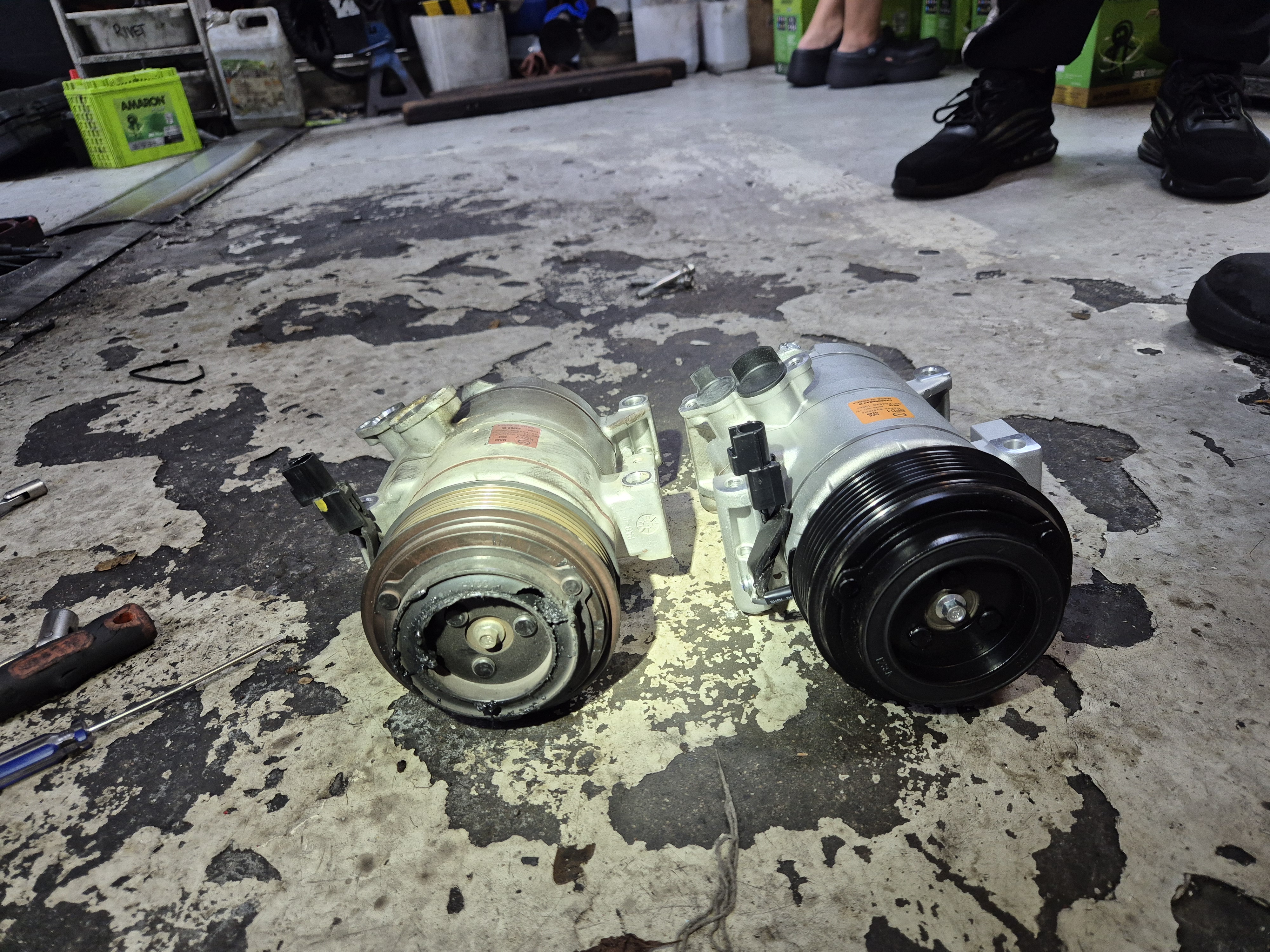
Honda Accord power steering failure symptoms
- Steering becomes noticeably heavier, especially during parking or three-point turns.
- Whining, groaning or squealing rises when the steering wheel is turned.
- The steering assistance cuts in and out, or the wheel feels inconsistent left versus right.
- Power-steering, EPS or check-engine warning lights appear.
- Red or amber fluid is visible under the front of the car, or the reservoir level keeps falling.
- The steering wheel does not return smoothly after a corner, or the car wanders after a repair.
Common causes in Singapore
1. Fluid leak, hose or seal failure
Ageing high-pressure hoses, rack seals and pump seals can seep. Singapore heat hardens rubber over time, while oil contamination and road grime hide small leaks. A low reservoir can make the pump noisy and eventually damage it.
2. Weak pump or worn drive belt
A hydraulic pump can wear internally and lose pressure. A loose, cracked or contaminated belt may also slip when the steering load increases. A squeal does not automatically mean the pump is finished; belt tension and pulley condition need checking.
3. Steering rack wear
Rack wear can cause leaks, play, uneven assistance or a clunk. Kerb impacts and repeated full-lock turns increase stress. If the rack is replaced, wheel alignment is part of the job—not an optional extra.
4. Electric motor, sensor or module fault
On electric-assisted models, a warning light may relate to a torque sensor, wiring, battery voltage, motor or control module. A flat battery or charging fault can create misleading electrical symptoms, so scan data and charging voltage should be checked together.
5. Suspension or tyre problems mistaken for steering failure
Uneven tyre pressure, a seized ball joint, worn tie-rod end or alignment problem can make the Accord pull or feel heavy. This is why we inspect the whole steering and suspension system rather than replacing the first suspected part.
We recently saw an Accord owner from Serangoon who assumed the pump had failed because the wheel became heavy during carpark manoeuvres. The actual issue was a leaking hose and fluid level low enough to make the pump whine. Finding the leak first avoided an unnecessary pump replacement.
How we diagnose and repair it
- We confirm the symptoms, model year and whether the assistance is hydraulic or electric.
- We inspect fluid level and condition, belts, hoses, pump, rack, steering joints, tyres and visible leaks.
- For electric systems, we scan relevant modules and check battery and alternator output.
- We test steering assistance at different speeds and listen for abnormal noise without forcing the wheel against full lock.
- We explain the repair options. This may be a hose or belt replacement, leak repair, pump or rack work, wiring/sensor repair, or electrical calibration.
- After fitting parts, hydraulic systems are bled and checked for leaks. Rack or suspension work is followed by alignment and a road test.
For related Honda ownership issues, compare this with our guides to Honda Civic engine mount symptoms, Honda HR-V CVT problems, Honda Jazz overheating and Honda Vezel common problems. For wider diagnosis context, see our battery, alternator and starter guide and car suspension noise guide.
Prevention tips for Accord owners
- Check the power-steering reservoir only if your model uses hydraulic assistance, and use the specified fluid.
- Look for fresh fluid after parking and have any recurring top-up investigated.
- Do not hold the wheel hard against full lock; back off slightly during tight manoeuvres.
- Keep tyres at the correct pressure and address kerb hits, pulling or uneven wear early.
- During servicing, ask for hoses, belts, rack boots, steering joints and charging voltage to be checked.
- Do not ignore an EPS or steering warning light, especially before an expressway trip on the CTE, PIE or BKE.
Honda Accord steering repair cost factors in Singapore
There is no honest single price without identifying the failed component. A diagnostic inspection is usually the sensible first spend. A hose, belt or leak repair is generally less costly than a pump, steering rack or electronic module. Price also changes with Accord generation, genuine versus remanufactured parts, labour access, fluid, alignment and whether other worn joints are found.
Ask for a written explanation of the fault and what is included. At Edwin Garage, we aim to repair the failed part rather than upsell unrelated work, and we explain when a remanufactured component is a reasonable option.
Common misconceptions
“Heavy steering always means the pump.” Not necessarily. Low fluid, a belt, rack fault, tyre issue or electrical problem can feel similar.
“Power-steering fluid is a normal consumable.” It should not disappear repeatedly. Falling level indicates a leak that needs locating.
“Changing the battery fixes every EPS warning.” Low voltage can trigger a warning, but the original fault must be confirmed and codes cleared only after testing.
When should you seek professional help?
Stop driving and arrange inspection if steering becomes suddenly heavy, assistance cuts out, fluid is pouring out, the steering wheel has excessive free play, a warning light stays on, or you hear grinding. A car that is difficult to control is not safe to drive to a workshop. For mild noise or a small seep, book early before it becomes a pump, rack or tyre safety issue.
What to ask before approving a steering repair
Before authorising work, ask which component has actually failed and what evidence supports that conclusion. A good inspection should distinguish a fluid leak from normal staining, confirm whether the pump is producing pressure, and check whether the rack boots and steering joints are intact. For electric assistance, ask whether the workshop checked battery voltage, charging output, fault codes, wiring and sensor data. These checks prevent a common problem: replacing an expensive pump or rack when the real cause is a loose belt, low voltage or a damaged hose.
It is also worth asking whether alignment, fluid bleeding, calibration and a road test are included. Steering work can alter the position of the front wheels, and a car that feels acceptable in the workshop may still pull on the road if alignment is skipped. Keep the old part or request photos of the leak when practical. Clear explanations are especially useful for older Accords where several age-related components may show wear at the same time.
Honda Accord power steering FAQs
Is the Honda Accord safe to drive with heavy steering?
No. If steering suddenly becomes heavy, difficult to return to centre or noisy, stop somewhere safe and arrange a professional inspection. Do not keep driving in traffic assuming it will recover.
Does a Honda Accord use electric or hydraulic power steering?
It depends on the generation and market. Some Accords use hydraulic assistance while newer versions may use electric or electro-hydraulic systems. Diagnosis must identify the exact system before parts are ordered.
Can low power-steering fluid cause total failure?
Yes, on hydraulic systems. Low fluid usually means a leak, not simply fluid consumption. Running the pump dry can turn a hose or seal leak into an expensive pump failure.
How much does Honda Accord power steering repair cost in Singapore?
The range depends on whether the fault is a belt, hose, fluid leak, pump, rack, sensor or electrical module. Inspection and minor leak repairs cost much less than rack or module replacement, so a workshop should confirm the failed component first.
How long does power-steering repair take?
A hose, belt or fluid repair may be completed in a shorter visit, while a rack, pump or control-module repair can require more time for parts, fitting, bleeding and alignment. Your workshop should confirm timing after diagnosis.
For more Singapore car guides, browse our free car repair guides. Book an appointment at sggarageedwin.as.me — online only.
Book your appointment online at sggarage.com. For enquiries, WhatsApp us at 97856612. Edwin Garage — Ang Mo Kio, open 10am–8pm, closed Sundays.