
Turning 10 does not make a car suddenly unreliable, and renewing its Certificate of Entitlement (COE) does not mean every major part must be replaced. What changes is the value of a careful, condition-based maintenance plan. Rubber, fluids, seals and wear items have had more time and heat cycles; mileage, service history and how the car was used matter just as much as age. At Edwin Garage, we help owners separate urgent safety repairs from sensible monitoring. Our trusted car servicing workshop in Ang Mo Kio supports drivers from AMK, Hougang, Yio Chu Kang and Serangoon with diagnosis before recommendations.
If you are new to maintaining an older car, our guides to first car servicing in Singapore and minor versus major servicing explain the basics. This guide focuses on what to pay closer attention to as a car reaches the 10-year mark, whether you are renewing COE or keeping an existing car on the road.
What does 10 years on the road actually change?
COE is the right to use a vehicle for a defined period; it is not a mechanical health certificate. If you renew a car's COE, the vehicle continues to need the maintenance, road-tax renewal, insurance and inspections applicable to its class and situation. Always check current requirements and due dates with LTA and an authorised inspection centre, because inspection rules depend on vehicle details and can change. A periodic inspection is also not a substitute for a workshop service: it does not assess every component's remaining life or uncover every developing fault.
At around 10 years, age-related deterioration becomes more likely, but there is no universal “10-year replacement list.” A low-mileage car with a complete service history may be in better shape than a newer car that has endured heavy stop-start use, infrequent servicing or repeated short trips. Singapore's humidity, hot engine-bay conditions, rainwater exposure and daily congestion on routes such as the CTE and PIE all contribute to wear in different ways.
Think in three buckets: items that are due by the manufacturer's time or mileage schedule; components that show measurable wear or leakage; and parts that remain serviceable but should be monitored. A technician should explain which bucket each recommendation falls into, what evidence supports it, and whether it can safely wait for a later visit.
Warning signs worth checking on an older car
Do not wait for a dashboard warning if you notice a change in how the car behaves. Arrange an inspection if you see any of these signs:
- Oil, coolant or other fluid spots under the parked car, or a repeated need to top up fluids.
- Temperature rising above its usual position, coolant smell, steam or a low-coolant warning.
- New vibration, knocking, clunking, steering pull, brake squeal or a longer stopping distance.
- Engine oil level dropping between services, blue exhaust smoke, rough starting or a warning light that returns.
- Tyres wearing unevenly, cracking on the sidewalls, or losing pressure more often than expected.
- Aircon that cools inconsistently, new rattles, musty smells or electrical accessories that work intermittently.
- A battery that cranks slowly, especially after the car has been parked for a few days.
A common pattern we see with older cars is that one small leak or worn bush is easy to dismiss because the vehicle still drives. The important step is identifying the source and checking whether it affects a safety system or can cause secondary damage. A brief inspection can turn a vague concern into a clear plan rather than a guess.
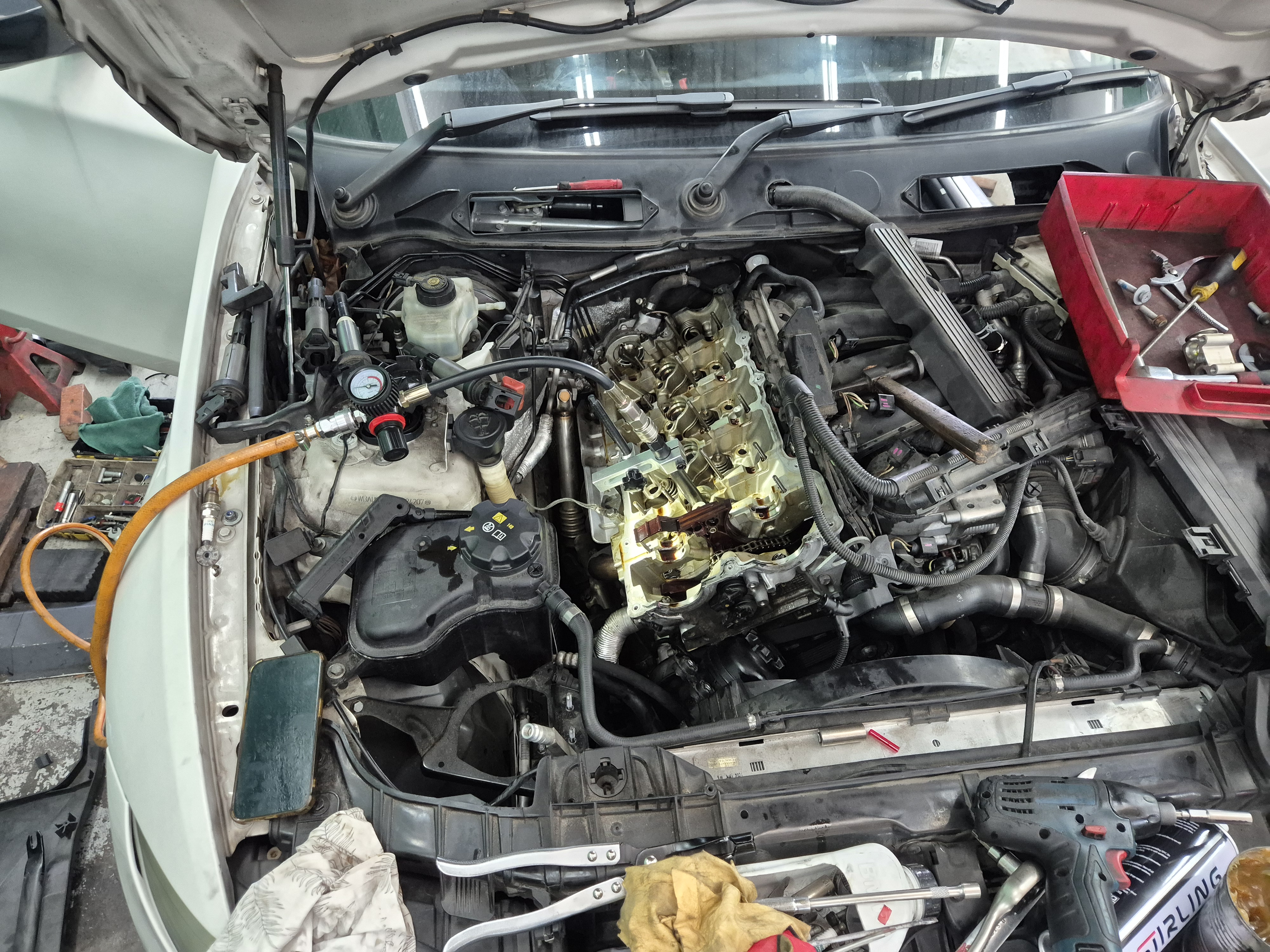
Why do repairs become more common around this age?
Age is only one clue. In our experience, the most frequent reasons an older car needs attention are:
- Rubber and plastic ageing. Hoses, bushes, seals and mounts harden or crack over time. Heat cycles in Singapore can accelerate deterioration, even when mileage is moderate.
- Normal wear from distance and traffic. Brakes, tyres, suspension joints and engine mounts are affected by mileage, road surfaces, loads and repeated stop-start driving.
- Deferred maintenance or incomplete records. A previous owner may have skipped fluids, filters or time-based replacements. Without invoices, the condition should be verified rather than assumed.
- Leaks and contamination. A minor seep can become a low-fluid problem; old coolant or incorrect fluids can affect connected components.
- Electrical age and environmental exposure. Batteries, connectors and wiring can be affected by heat, moisture, corrosion or accessories left on while parked.
Service needs vary by model, so follow the correct schedule for the exact engine. See our Toyota Prado service schedule guide for a model-specific example.
What should a workshop inspect before recommending repairs?
A useful inspection starts with your concern and the car's service history. Tell the mechanic when the symptom happens, whether it is getting worse, and any recent work or warning lights. If maintenance records are incomplete, share what you know and say what is uncertain; that helps avoid treating an assumption as fact.
Depending on the car and symptoms, a workshop may review visible leaks, fluid condition, belts and hoses, battery and charging performance, brake wear, tyre condition, suspension play, engine mounts and diagnostic fault codes. A road test can help reproduce a vibration, noise or handling concern. Not every car needs every test, and a scan alone cannot prove that a component is healthy or failed.
After inspection, ask for a prioritised explanation: what is unsafe or likely to cause further damage now, what is due soon, and what can be monitored. A sound estimate separates parts and labour where possible, explains whether parts are new or remanufactured, and identifies any additional work that might only be confirmed after dismantling. Edwin's approach is to diagnose first and discuss options before proceeding; see what to expect at a first visit to Edwin Garage.
When comparing an estimate, compare the same scope, parts quality and warranty rather than just the headline number. Our guide on understanding car repair costs in Singapore covers how to ask useful questions about a quote.
How to maintain a COE car without replacing everything
Start with the owner's manual and the vehicle's documented maintenance schedule. If service history is missing, ask a workshop to establish a baseline and list what is confirmed, overdue or unknown. Then keep a simple record of dates, mileage, invoices and observations. That record is valuable for avoiding duplicated work and for making future repair-or-replace decisions.
- Check engine oil and coolant at the intervals and method stated in the manual; never open a hot cooling system.
- Have brakes, tyres, steering and suspension assessed when servicing is due or when symptoms appear.
- Replace fluids and filters by the correct time or mileage interval and specification, not solely because the car has passed 10 years.
- Address a leak early, but ask for the source to be confirmed before authorising a large repair.
- Use the correct tyre pressure from the vehicle placard and inspect for damage after pothole impacts.
- Park in shade where practical, keep drains clear of leaves and avoid ignoring warning lights or abnormal temperatures.
- Book a check before a long trip or after a new symptom rather than waiting for a breakdown.
What does COE car maintenance cost in Singapore?
There is no single “10-year service price.” As a broad planning guide, a routine oil-and-filter service for many mainstream cars at an independent workshop may be in the low hundreds of dollars (roughly S$150–S$400), while a diagnostic inspection may range from tens to low hundreds depending on the tests required. Brake, cooling-system, battery or suspension repairs can range from a few hundred dollars to over S$1,000 when several parts, extensive labour or a higher-cost model are involved. These are indicative ranges only, not a quote or guarantee.
The actual cost depends on make and model, engine layout, parts availability, fluid specification, labour access, what testing is needed and whether related components are also worn. A cooling-system leak, for example, can be a hose issue or a more involved repair; the symptoms alone do not establish the cause. Ask for a diagnosis and written scope before deciding. Edwin Garage serves AMK and nearby Hougang, Yio Chu Kang and Serangoon, and we will explain what is known before proposing work.
If you'd like a condition-based check rather than a blanket parts list, book your appointment online. For an initial question, WhatsApp Edwin with your car make, model, year, mileage and symptom; online booking is required for appointments.
Common myths about 10-year-old cars and COE
“Once I renew COE, I should replace every old part.”
No. COE renewal does not automatically make every original component due for replacement. Follow the model's schedule and inspect actual condition. Replace a part when the manufacturer interval, measured wear, test results or safety condition supports it.
“If the car passes inspection, it needs no workshop maintenance.”
An inspection checks specified requirements at a point in time. It does not replace scheduled servicing or guarantee that every system will remain trouble-free between inspections.
When should you seek professional help?
Stop in a safe place and arrange assistance if the temperature gauge rises sharply, the engine-oil pressure warning appears, there is steam or smoke, braking changes suddenly, steering becomes difficult, or a tyre is damaged. Do not continue driving to “see if it clears” when a serious warning appears. Never remove a radiator cap or coolant reservoir cap while hot.
Arrange a prompt workshop check for a persistent fluid leak, recurring warning light, burning smell, new knock, repeated battery failure, worsening vibration or unusual tyre wear. If the car is due for inspection or road-tax renewal, verify the date and requirements through the relevant official channels; a workshop assessment can help with mechanical maintenance but does not replace statutory inspection.
For Singapore drivers who renewed COE and want to keep the car dependable, Edwin Garage has been helping drivers since 2010. We work through the symptoms, check the relevant systems, and explain what needs attention now versus later. We are in Ang Mo Kio Industrial Park 2 and welcome enquiries from Hougang, Yio Chu Kang and Serangoon. Browse our Singapore car repair guides for more practical maintenance topics.
Planning to keep your car after COE renewal?
Start with an inspection based on the car's condition—not an automatic parts list. Edwin Garage has been serving Singapore drivers since 2010, with a 4.9-star rating and 516+ Google reviews.
Book a workshop appointment onlineQuestions before booking? WhatsApp Edwin about your car.
COE car maintenance FAQs
Does renewing my COE mean my car needs a major service?
No. COE renewal does not itself trigger a universal major service. Follow the manufacturer's schedule and have overdue or uncertain items checked against your specific car's condition and history.
What should I check first on a 10-year-old car?
Start with the service records and any current symptoms, then have safety-related items such as tyres, brakes, steering and suspension checked along with visible leaks, fluids, battery and charging. The exact inspection depends on the model and condition.
Is a statutory vehicle inspection the same as a full workshop check?
No. A statutory inspection checks required items for roadworthiness under the applicable rules. A workshop service looks at maintenance needs and concerns; neither should be treated as a replacement for the other.
How much should I budget for COE car maintenance?
There is no fixed annual amount because model, mileage, parts and condition differ. A routine service may cost a few hundred dollars, while age-related repairs can run from hundreds to more than S$1,000. Request an itemised estimate after diagnosis.
Should I scrap or repair my COE car?
Compare the car's condition, upcoming work, expected reliability, annual running costs and how long you plan to use it. A single repair estimate is not the whole decision; ask for priorities and consider a second opinion for a major repair.
Book online at sggarageedwin.as.me. For enquiries, WhatsApp us at 97856612. Edwin Garage — Ang Mo Kio, open 10am–8pm, closed Sundays.
Key Takeaways
- COE renewal does not automatically require a major service or replacement of every ageing part.
- A car's service history, mileage, symptoms and measured condition matter more than the age label alone.
- Prioritise safety-related faults and confirmed overdue maintenance; monitor serviceable parts.
- Use a workshop service and statutory inspection for their separate purposes, and verify official requirements.
Got a Question? Ask Edwin
Edwin Garage is located in Ang Mo Kio. Serving Hougang, Yio Chu Kang, Serangoon & surrounding areas.
WhatsApp Edwin Book Appointment